

ABOUT NERIUM AYURVEDA
Healthy living
Ayurveda offers a holistic approach to well-being that emphasizes the harmony of body, mind, and spirit. Being at peace with oneself as well as one's environment is important for overall well-being. One of the key principles of Ayurveda is that each person is unique and their dosha constitution is different. Hence, their journey to physical, mental, and spiritual well-being has to be tailor-made.
Ayurveda is a system of medicine that originated in ancient India over 5000 years ago. The word Ayurveda is derived from two Sanskrit words, “Ayu,” which means life, and “veda,” which means knowledge or science.
Ayurveda is considered one of the oldest medical systems in the world, often referred to as the ‘Mother of all healing’. It is a part of Atharva Veda, which is one of the four Vedas. The foundational Granthas of Ayurveda are Caraka Samhita, Susrutha Samhita, and Astanga Hridayam. These classics, collectively called “Brihatrayees,” or the greater triad, are the oldest documents in medical history.
This ancient treatment science focuses on healing as well as maintaining health through personalized treatments, yoga, and lifestyle modifications. Ayurveda is the traditional system of healing that is based on the concept of balancing the three doshas, or bodily humors: vata, pitta, and kapha. These humors are balanced with the help of therapies, Panchakarma, and herbal preparations. This improves digestive fire, metabolism, sleep quality, and ultimately your Ojas, or vitality. A strong healthy body will be the seat for a calm and healthy mind.
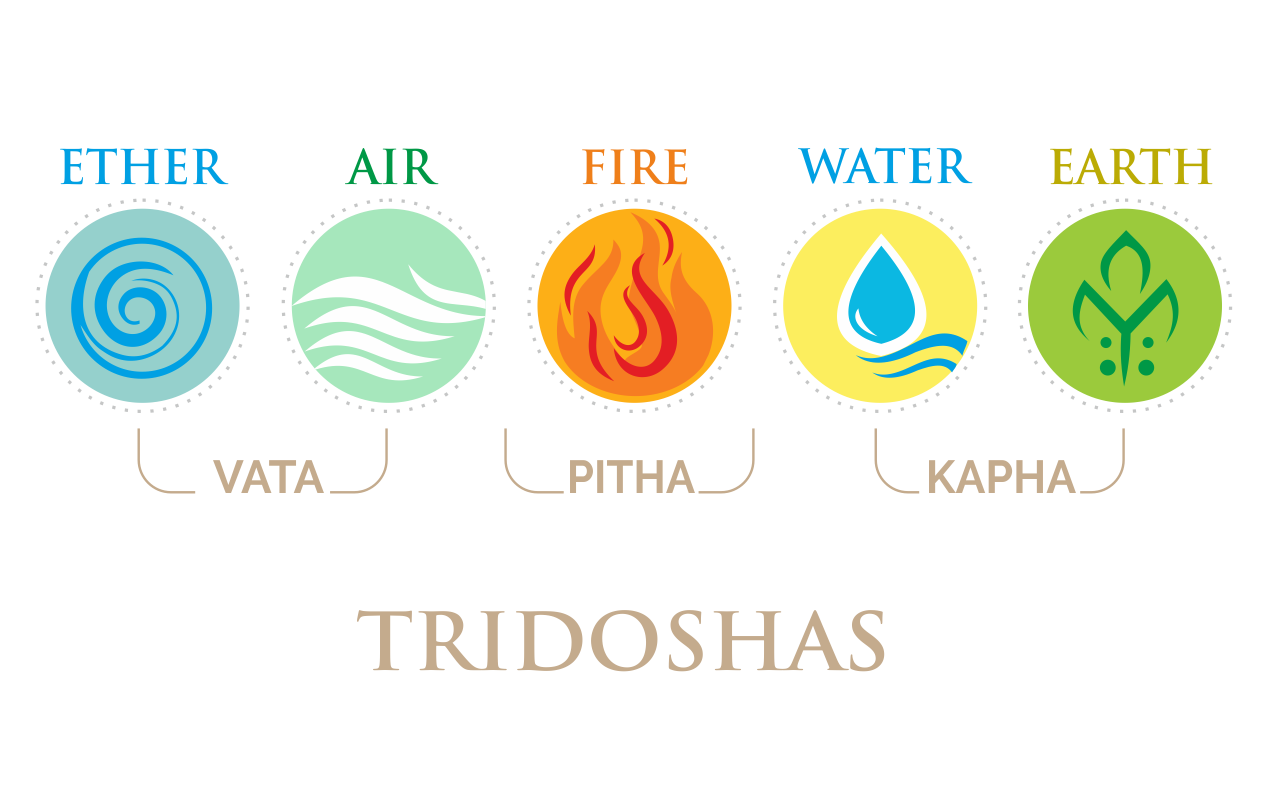
According to the Vedas, the universe is made of the Pancha Maha Bhootas: Earth, Water, Fire, Air, and Ether. We, being a part of the universe is made up of these five basic elements of nature. These elements combine to form the Tridosas. Earth and water represent the Kaphadosa, Fire is the Pitta dosa, and Air and Ether represent the Vata dosa. Each dosa has specific features and attributes associated with it. People are classified depending on the predominance of the dosa composition in them. This forms the platform for analysing their Prakriti or biological constitution.
Similarly, ailments are also classified depending on the predominance of the dosa or Vikriti in the symptoms associated. This helps the physician to identify the Prakriti of the individual, the vitiated dosa, and plan the course of action to bring back the balance in body and mind. To understand how this dosha imbalance leads to illness, read our detailed guide on how Ayurveda classifies disease.
The concept of Agni
The digestive fire is known as Jataragni. When the Jataragni is normal food gets digested properly and its essence gets absorbed into the blood. The essence thus absorbed is called the ahara rasa. This dhatu, then by the action of dhatu agni will get converted into further dhatus of the body rakta, mamsa, medo, asthi and sukla dhatus.
Dhatus
By the action of agnion the food we ingest, ahara rasa is formed. This ahara rasa or the nutrients absorbed, forms the seven dhatus of the body namely Rasa(lymph), Rakta(blood), Mamsa(muscles),Medas(fat), Asti (Bones), Majja(bone marrow) and Sukra(reproductive substances). The dhatus are nourished by the datu agni of the previous dhatu. Any impairment in dhatu agni affects the normal metabolism at the dhatu level and results in improper nourishment of the respective dhatu leading to diseases.
Nerium Ayurvedic Treatments
Improper food, activities, sleep and lifestyle can lead to mild vitiation of dosas in the body. At this point, mild treatments and herbal preparations along with lifestyle modification helps in correcting the imbalances of the body. Ayurveda considers diet, lifestyle and sleep as the pillars of preventive healthcare.
Request a Call Back
Contact Nerium Ayurveda Clinic in Kakkanad for inquiries or to schedule Ayurveda massages in Kakkanad through a quick phone call or by sending us an email.